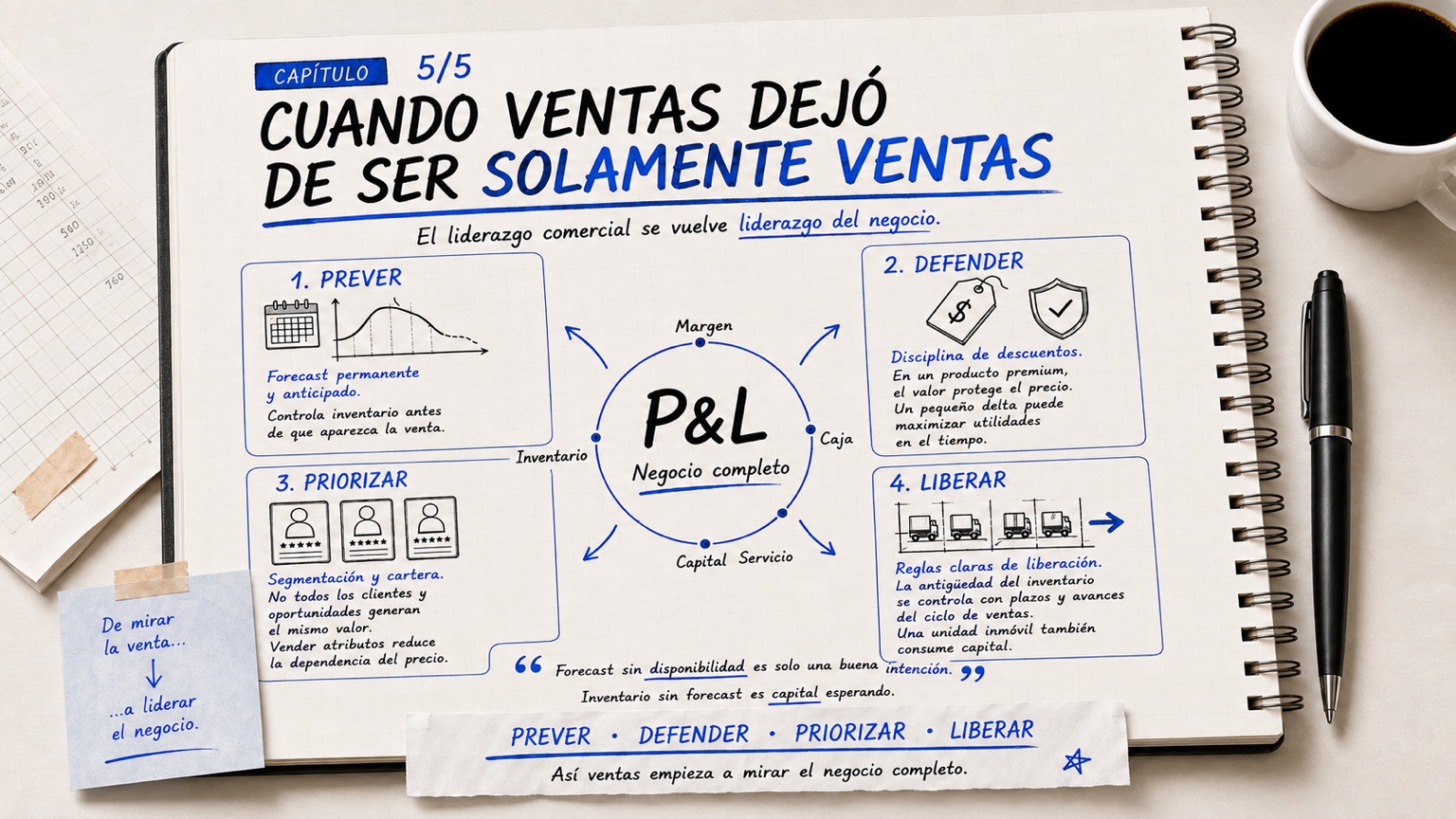
Inventory is not controlled by looking at the yard. It is controlled months earlier, in the forecast. That insight changed how I saw the business. Over time, I reduced many decisions to four verbs: anticipate, defend, prioritize and release.
Anticipate demand through a continuous forecast. The point is not to predict the future perfectly, but to decide which models, configurations and drivetrains we will need before the sale arrives. A forecast without availability is a good intention; inventory without a forecast is capital waiting.
Defend value. With a premium product, customers naturally push toward their target price. Our job is to show why a difference in price can help maximize results over years of operation: availability, fuel consumption, safety, uptime, service and residual value. Price is protected not simply by refusing a discount, but by giving the customer reasons to value the difference. This requires disciplined discount management.
Prioritize the portfolio. Customers, applications and opportunities do not all create equal value. Segmentation tells us where to invest time, what attributes to sell, what risks to take and how far to negotiate. A well-managed portfolio reduces the temptation to solve every sale through price alone.
Release capital. A unit reserved for a stalled opportunity has a cost. If the sales cycle makes no progress within defined timeframes, that unit must become available to other opportunities—not because we distrust the salesperson, but because we must manage a business asset responsibly.
Market share, price, inventory, delivery speed and turnover are parts of the same equation. More stock may improve the odds of selling; a lower price may help close a deal; keeping a unit reserved may preserve an opportunity. Every choice consumes margin, capital or time. That is when sales becomes more than sales: you begin to look at the P&L, cash, working capital and lifetime customer value.
Across five chapters, I learned to manage an ecosystem, develop markets, build scalable systems, grow with discipline and take conscious risks. Ultimately, leading a business often means knowing what to anticipate, defend, prioritize and release. I learned not only to sell more, but to see the whole business.